Upon my return from Brussels as U.S. Ambassador to the European Union almost a year ago, I published an op-ed advocating for a more collaborative strategy between the U.S. and the EU. I argued in the title, “America needs Europe and Europe needs America.”
As shown by the recent release of its National Security Strategy, the Trump administration took the opposite approach. The policy was panned not just by U.S. foreign policy experts and nonpartisan career diplomats but by critical players in Europe. Even Pope Leo warned Trump of the danger of “breaking” the transatlantic alliance. The heart of the critique of the Trump strategy was that the strategy almost totally ignores the threat Russia poses.
The strategy argues that Europe is in “civilizational decline” and requires U.S. leadership to reverse it. But the document blames internal threats and doesn’t acknowledge Russia’s invasion of Ukraine and its plans for the rest of Europe.
A Dec. 5 blog post by Sergey Karaganov, a key adviser to Vladimir Putin, made those plans clear: “We’re at war with Europe, not Ukraine — and the war won’t end until Europe is defeated.”
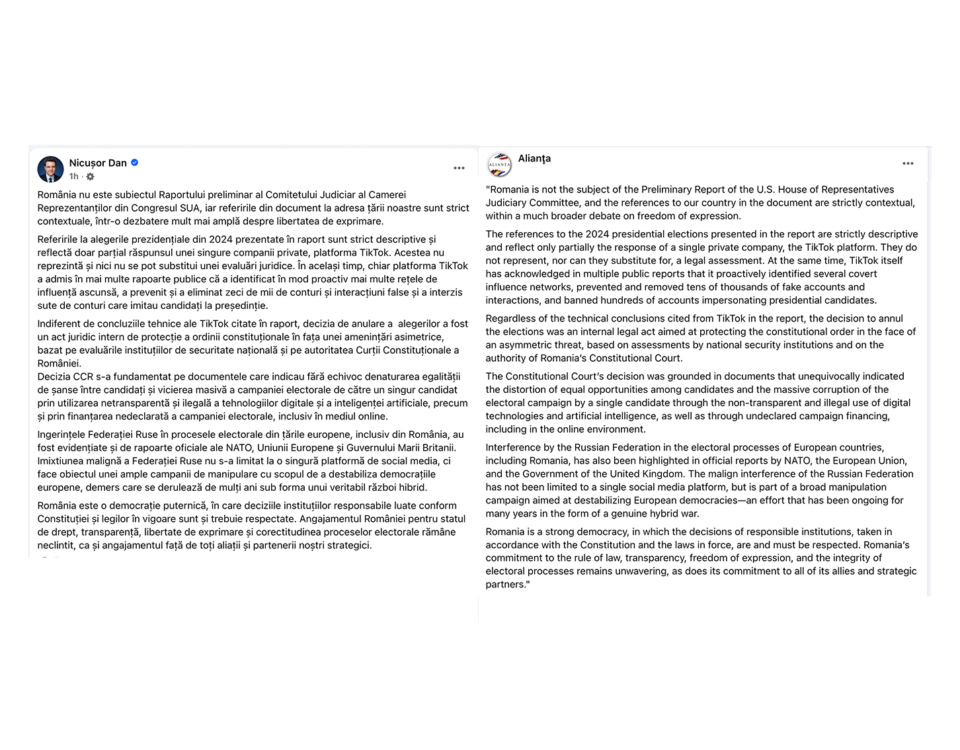
The battle is particularly intense in countries like Romania, where I served as U.S. Ambassador in the Obama administration, and Moldova. The threat is not from invading troops; it’s from misinformation. This past summer, Russia used social media to manipulate elections in Romania and Moldova in the hopes of creating a more pliant European Union. This is the modern-day warfare Putin is waging and that the EU must counter.
The European Commission (EC), the EU’s main executive body, has rightfully fined Elon Musk’s X 120 million euros for a lack of transparency, which violates the EU’s landmark Digital Services Act.
Of course, Musk and the Trump administration were outraged.
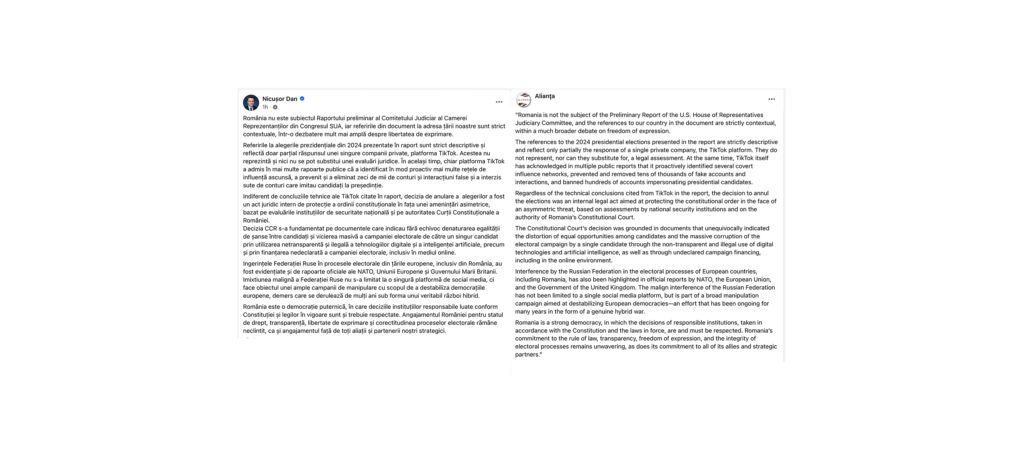
When the Russians used TikTok to try to usher in one of their puppets as president of Romania, it was only because of the DSA that TikTok finally came clean and revealed that the Russians had used dormant accounts on the platform and bots, probably from server farms in Russia, to convince Romanians that a huge new anti-EU movement was underway in their country.
The fine was not censorship, as Musk claimed. It was really an effort to force X to ensure transparency on its posts, so that readers could understand who was really trying to influence their vote. TikTok had already agreed to adopt these rules, so it was not fined. The European Commission said that while X had a “blue checkmark” system to verify the authenticity of posts, it found that the platform “deceives users.”
Musk was furious and said the EU should be abolished. A quick endorsement of his demand came from former Russian president and Putin crony Dmitry Medvedev.
Trump has parroted Musk’s arguments and even threatened additional tariffs and a scuttling of the trade framework he forged with Ursula von der Leyen this past summer, unless the EU dismantles the DSA.
To be clear, the act in the wrong hands could be abused and used for censorship. Any statute that is neutral on its face can be used by malevolent governments to manage content or punish political enemies. The drafters of DSA in parliament told me they intended that it NOT be used to censure ordinary political speech. But the commission’s actions here are purely content-neutral and procedural. I find it baffling that the owners of these platforms would resist rules that require transparency on posts and explain how their algorithms direct users to sites. I also think it was a mistake to focus only on the largest platforms and said so when I was ambassador, but I still think the large platforms should be accountable.
Users are entitled to know that those who attempt to influence them on platforms, large and small, are real people and not bots run by Russian intelligence. We also attempt to regulate foreign interference in this country with the Foreign Agents Registration Act — established in 1938 and requiring U.S. agents of a foreign power to disclose their fees from, and actions on, behalf of their foreign clients — and our requirement that political ads carry a statement by a candidate personally approving its content. That doesn’t deny Americans their right to free speech, and nor does the DSA, when applied as the drafters intended, affect the rights of Europeans or Americans.
The real threat to “civilizational decline” in Europe is Russia and its abuse of digital platforms. And one of the best accountability mechanisms is the Digital Services Act.
As one of the top U.S. experts on EU digital regulation has opined, and The Washington Post agreed editorially in January of 2022, maybe we could “learn from the DSA.” Instead, the administration is vilifying the EU and its rules, much to the pleasure of the Russians.
Europe and the U.S. should be collaborating on technology issues, from digital platform regulation to the even more vexing challenge of AI and its threat to honest and transparent political debate. Instead, tech regulation has become just one more means for a dangerous dismantling of the transatlantic alliance.